
Pistachio
Pistachio nutrition facts
Wonderfully delicious pistachio nuts have been revered as the symbol of wellness and robust health since ancient times. The nuts are enriched with many health-benefiting nutrients that are essential for optimum health.
Pistachio nuts are dry fruits of species of trees belonging in the Anacardiaceae family, of the genus: Pistacia. The plant is a medium sized broad, bushy, dioecious, deciduous tree, believed to be originating in the mountain ranges of West-Asian region. Several cultivars exist; however, the most popular variety grown for the commercial purpose is the kerman.
|
|
|
|
Pistachio-bunch. |
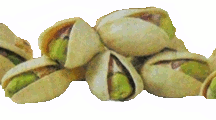
Delicious Pistachio nuts! |
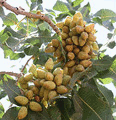
Pistachios grow well under hot, dry climates with cool winters. They are currently being cultivated in large scale in the orchards in the USA, Iran, Syria, Turkey, and China. After plantation, it takes approximately eight to ten years until it produces its first major crop. Once established, it keeps bearing fruits for centuries.
The fruit, in fact, is a drupe (a fruit with a large, central located single seed), and the seed kernel is actually the edible portion. Each season, the tree bears heavy clusters of fruits, which appear somewhat like that of a grape bunch. Exteriorly, the mature fruit features off white colored, hard, shell with splits apart exposing yellow-light green colored oblong kernel, which measures about 1 inch in length and 1/2 inch in diameter.
Health benefits of Pistachios
-
Pistachios are delicious tree nuts recognized for their wholesome nutrition principles. Together with walnuts, almonds, and cashew, they form important source of protein, fats and minerals to otherwise dry and arid regions of Central, West and South Asian regions.
-
Pistachios are rich source of energy; 100 g of nuts contain 557 calories. In addition, they are rich in mono-unsaturated fatty acids like oleic acid and an excellent source of antioxidants. Regular intake of pistachios in the diet helps to lower total as well as bad LDL cholesterol and increases good HDL cholesterol levels within the blood. Research studies suggest that Mediterranean diet that is rich in dietary-fiber, mono-unsaturated fatty acids, and antioxidants help to prevent coronary artery disease and strokes by favoring healthy blood lipid profile.
-
They are rich source of many phyto-chemical substances that may contribute to their overall antioxidant activity, including carotenes, vitamin E, and polyphenolic antioxidant compounds. Research studies have been suggestive of that these compounds help the human body remove toxic oxygen-free radicals and thus, protect the body from diseases, cancers, as well as infections.
-
Pistachios are an excellent source of vitamin-E, especially rich in gamma-tocopherol; contain about 23 g per100 g. vitamin E is a powerful lipid soluble antioxidant, essential for maintaining the integrity of cell membrane of mucus membranes and skin; offer protection from harmful oxygen-free radicals.
-
The nuts are packed with many important B-complex groups of vitamins such as riboflavin, niacin, thiamin, pantothenic acid, vitamin B-6, and folates.
-
These nuts are the storehouse of minerals like copper, manganese, potassium, calcium, iron, magnesium, zinc, and selenium. 100 g nuts provide 144% of daily-recommended levels of copper. Copper is an essential trace mineral that is required in neuro-transmission, metabolism, as well as red blood cell (RBC) synthesis.
-
Pistachio nut oil features flavorful, pleasant nutty aroma and has excellent emollient properties. It helps to keep skin well protected from dryness. It has also been used in cooking, and as “carrier or base oil” in traditional medicines in massage therapy, aromatherapy, in pharmaceutical, and cosmetic industry.
Just a hand full of pistachios a day provides enough recommended levels of phenolic anti-oxidants, minerals, vitamins, and protein.
|
See the table below for in depth analysis of nutrients: | ||
|
Principle |
Nutrient Value |
Percentage of RDA |
|
Energy |
557 Kcal |
29% |
|
Carbohydrates |
27.97 g |
21.5% |
|
Protein |
20.60 g |
37% |
|
Total Fat |
44.44 g |
148% |
|
Cholesterol |
0 mg |
0% |
|
Dietary Fiber |
10.3g |
27% |
|
Vitamins |
||
|
Folates |
51 µg |
13% |
|
Niacin |
1.3 mg |
8% |
|
Pantothenic acid |
0.520 mg |
10% |
|
Pyridoxine |
1.7 mg |
131% |
|
Riboflavin |
0.160 mg |
12% |
|
Thiamin |
0.870 mg |
72.5% |
|
Vitamin A |
553 IU |
18% |
|
Vitamin C |
5 mg |
8% |
|
Vitamin E-γ |
22.60 mg |
150% |
|
Electrolytes |
||
|
Sodium |
1 mg |
0% |
|
Potassium |
1025 mg |
22% |
|
Minerals |
||
|
Calcium |
107 mg |
11% |
|
Copper |
1.3 mg |
144% |
|
Iron |
4.15 mg |
52% |
|
Magnesium |
121 mg |
30% |
|
Manganese |
1.2 mg |
52% |
|
Phosphorus |
376 mg |
54% |
|
Selenium |
7 µg |
13% |
|
Zinc |
2.20 mg |
20% |
|
Phyto-nutrients |
||
|
Carotene-ß |
332 µg |
-- |
|
Crypto-xanthin-ß |
0 µg |
-- |
|
Lutein-zeaxanthin |
0 µg |
-- |
Selection and storage
|
|
|
Pistachio-nuts |
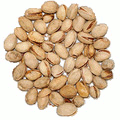
Pistachios are available in the markets year around. In the grocery store, different forms of nuts are sold such as shelled, unshelled (in-shell), salted, sweetened, etc. Try to buy completely unshelled (with intact outer coat) nuts instead of processed ones. They are generally available in the airtight packs as well as in bulk bins.
Whole nuts should feature healthy looking, off white color shell, have compact and uniform in size, and feel heavy in hand. They should be free from cracks other than the natural split, mold, spots, and of rancid smell.
Unshelled pistachios can be placed in a cool dry place over several months. However, shelled (without the shell) kernels should be placed inside an airtight container and kept inside the refrigerator in order to prevent them turn rancid.
Culinary use
-
They are usually eaten on its own, by cracking them open between fingers or using nutcracker machine. They can also be enjoyed roasted, salted, or sweetened, just like peanuts.
-
Pistachios are nutty, yet pleasantly sweet in taste with a fruity aroma. Baklava, a sweet-pastry made of layers of paper-thin "phyllo or strudel dough" filled with chopped pistachio, almonds and cashew nuts and sweetened with syrup or honey, is a popular pastry preparation in Turkey, Iran, Armenia, and many Middle East states.
-
Roasted and crushed nuts often sprinkled over salads, desserts, particularly sundaes and other ice cream based dessert preparations (for example, kulfi in Indian subcontinent), biscuits, sweets and cakes.
-
Split pistachios are a great addition to vegetable/fruit salads.
-
Popularly known as "pista," these nuts have been widely used in sweet dishes in Indian, Pakistani and other South-East Asian countries.
Safety profile
Pistachio nut allergy is common in some sensitive individuals. The allergic manifestations are due to chemical compound anacardic acid (urushiol) that is present in these nuts.
The reaction symptoms may range from simple skin itching (hives) to severe form anaphylactic manifestations, including breathing difficulty, pain abdomen, vomiting, and diarrhea.
Cross-reactions may also occur with some other related nuts and fruits of Anacardiaceae family such as mango, cashew nuts... etc. Persons with known allergic reactions to these nuts are therefore needed to observe caution while eating cashews and mango. (Disclaimer)
